To enroll in WIC, gather the required documents, find your local WIC office, schedule an appointment, and attend the meeting to receive nutritional support benefits for eligible women and children.
How to enroll in WIC can be a crucial step for families seeking nutritional support. If you’re unsure where to start, don’t worry! In this guide, we’ll walk you through the process and help you understand the available resources.
Understanding what WIC is
WIC, which stands for Women, Infants, and Children, is a federal assistance program designed to provide nutritional support to eligible families. Its primary goal is to promote healthy eating habits and ensure access to nutritious foods.
Understanding what WIC is can open doors for families needing help during critical growth periods. The program offers support, education, and resources tailored to mothers and children. To qualify, families must meet specific income guidelines and be at nutritional risk.
Key Components of WIC
The WIC program not only provides food assistance but emphasizes the importance of a balanced diet. Participants receive assistance with:
- Access to healthy foods such as fruits, vegetables, grains, and dairy products.
- Nutritional education on meal planning and healthy recipes.
- Support for breastfeeding mothers, including resources and counseling.
Furthermore, WIC places a strong emphasis on preventive healthcare, ensuring that children follow regular growth check-ups and immunizations. The program aims to foster a healthy start for children by providing resources to families that might otherwise struggle to access them.
Overall, understanding WIC highlights its crucial role in enhancing family nutrition and improving health outcomes for vulnerable populations. The well-rounded support provided creates a foundation for healthier development in children and promotes wellness within the family unit.
Eligibility criteria for WIC enrollment
Understanding the eligibility criteria for WIC enrollment is essential for families seeking nutritional assistance. WIC is designed to help those who may face challenges in accessing healthy food options. To qualify for the program, families must meet specific guidelines related to income, residency, and nutritional risk.
Income Guidelines
To be eligible for WIC, your family’s income must fall below a certain level. Typically, this is at or below 185% of the federal poverty level. Income can include:
- Salary or wages from work.
- Unemployment benefits.
- Social Security benefits.
Each state may have its own exact income limits, so it’s important to check local resources to get precise information.
Residency Requirements
Another key component is that applicants must reside in the state where they apply for WIC. This ensures that benefits are given to those in the community who need them most. You will likely need to provide proof of residency as part of the application process.
Additionally, it is important to mention that eligibility extends to certain groups, including pregnant women, postpartum mothers, infants, and children up to the age of five. If a family member falls into one of these categories, there is a higher chance of being eligible for the program.
When applying, also be prepared to discuss nutritional needs and concerns. WIC aims to support families that are determined to be at nutritional risk. This can include factors like low birth weight, developmental delay, or inadequate dietary intake.
Documents required for WIC application
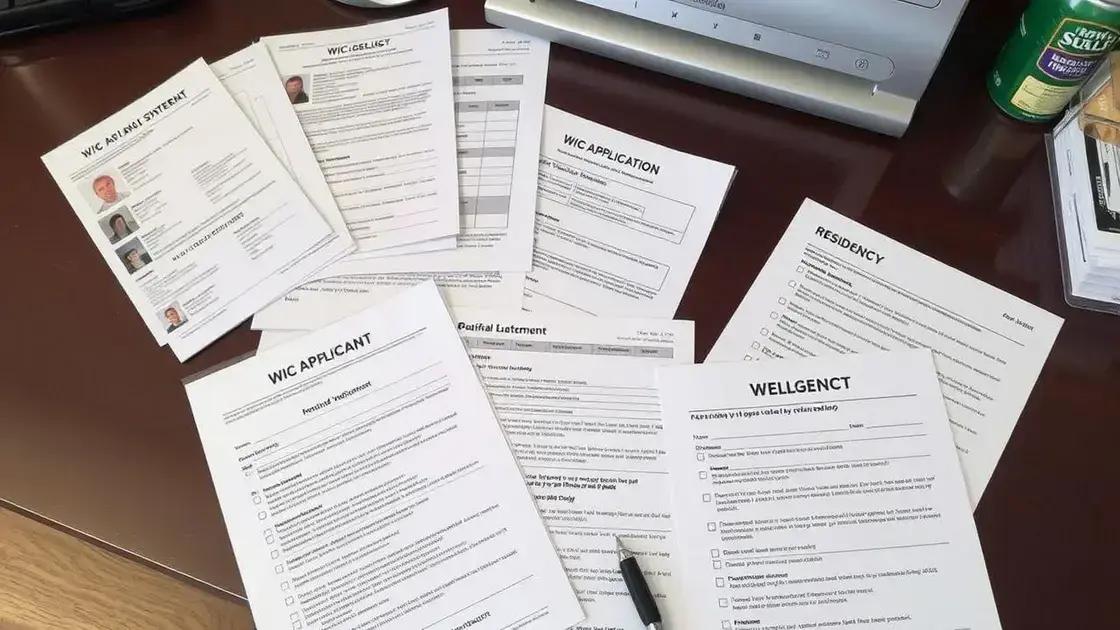
When preparing to apply for WIC, it’s essential to gather all the necessary documents. Proper documentation is a critical step in the WIC application process, ensuring that your application can be processed efficiently.
Identification Documents
First, you will need to provide proof of identity. Here are some acceptable forms of identification:
- Driver’s license or state ID.
- Passport.
- Birth certificate for children.
Having the right identification helps verify your identity and strengthens your application.
Proof of Income
Another crucial requirement is proof of income. This lets WIC assess whether you meet the economic guidelines. Common documents include:
- Payslips from recent work.
- Tax returns.
- Unemployment benefits statements.
If your income fluctuates, be prepared to provide several months of documentation.
Proof of Residency
You must also show that you live in the state where you are applying. Acceptable documents for proof of residency may include:
- Utility bill with your name and address.
- Lease or rental agreement.
- Bank statement.
These documents confirm your residency and help ensure that WIC benefits go to families within the local area.
Additionally, if you are applying for a child, having their medical records handy can also be beneficial. This information helps WIC understand specific health needs and risks.
Steps to complete your WIC enrollment
Completing your WIC enrollment involves a few straightforward steps, making the process accessible for families in need. By following these steps, you can ensure a smooth transition into receiving benefits.
Step 1: Gather Required Documents
Start by collecting all necessary documentation. This includes identification for each family member, proof of income, and residency. Having these documents ready will save time during your enrollment.
Step 2: Find a Local WIC Office
Next, locate your nearest WIC office. You can find this information online or by contacting community health centers. Each state has its own WIC program, so it’s essential to reach out to the correct local office.
Step 3: Schedule an Appointment
Once you identify a local WIC office, schedule an appointment. During this visit, you will complete an application. It’s helpful to be on time and bring your collected documents with you.
Step 4: Attend the Appointment
Attend your appointment prepared to answer questions about your family’s needs. WIC staff will assess your eligibility by reviewing your documents and asking about your dietary habits. This is also a great time to discuss any specific health concerns.
Step 5: Receive Your Benefits
If approved, you will receive WIC benefits, which can include vouchers for nutritious foods and information on healthy eating. Be sure to understand how to use these benefits effectively.
Each state may have slightly different steps, so check with your local office for specific guidance. Following these steps will help you or your family successfully navigate the WIC enrollment process and gain access to vital nutritional support.
Tips for utilizing WIC benefits effectively
Once you’ve enrolled in WIC, knowing how to use your benefits effectively is crucial for maximizing your support. These benefits can significantly improve your family’s nutrition and overall health.
Understand Your Benefits
Your WIC benefits typically include vouchers or coupons for specific foods. Familiarize yourself with what foods are covered. This usually includes:
- Fruits and vegetables.
- Whole grains like bread, rice, or cereal.
- Dairy products such as milk, cheese, and yogurt.
Reviewing this list can help you make informed shopping decisions, ensuring you get the most out of your benefits.
Plan Your Shopping Trip
Planning your shopping trip can save time and ensure you purchase eligible foods. Create a grocery list based on your family’s needs and the foods covered by WIC. This approach helps you avoid unapproved items and makes shopping more efficient.
Use Local Resources
Take advantage of local resources, such as farmers’ markets. Many WIC programs coordinate with these markets, allowing you to use your benefits for fresh, locally-grown produce. This not only supports local farmers but also enhances your family’s diet.
Additionally, educational resources provided by WIC can offer tips on cooking healthy meals. Familiarizing yourself with these materials can empower you to make nutritious food choices.
Keep Track of Your Benefits
Stay organized by keeping track of your benefits. Learn how to check your balance and understand the expiration dates on your vouchers or food prescriptions. This practice helps you avoid missing out on benefits.
Being proactive about managing your WIC benefits can lead to healthier meals and improved well-being for your family, making the most of the resources available.
FAQ – Frequently Asked Questions about WIC Enrollment
What is WIC and who qualifies for it?
WIC is a federal assistance program that provides nutritional support to low-income pregnant women, new mothers, infants, and children up to five years old. Eligibility is based on income and nutritional risk.
What documents do I need to apply for WIC?
You will need to provide proof of identity, proof of income, and proof of residency. Common documents include ID cards, pay stubs or tax returns, and utility bills.
How can I make the most of my WIC benefits?
Plan your shopping trips, understand which foods are covered, and take advantage of local resources like farmers’ markets to maximize the use of your benefits.
What steps should I follow to complete my WIC enrollment?
Gather your documents, find a local WIC office, schedule and attend your appointment, and understand the benefits you will receive if approved.