WIC provides essential nutritional assistance for low-income families, offering food vouchers, education, and health services to pregnant women, breastfeeding mothers, and children under five.
Who qualifies for WIC in 2025? This essential program supports families in need by providing nutritional assistance. If you’re curious about eligibility and benefits, keep reading to discover how WIC can make a difference.
Understanding WIC program guidelines
Understanding the WIC program guidelines is essential for families looking to receive nutritional assistance. This program, aimed at supporting women, infants, and children, has specific rules and requirements that every applicant should know.
What is WIC?
The Women, Infants, and Children (WIC) program is a federal assistance initiative designed to address the nutritional needs of low-income families. It offers food, counseling, and support during critical stages of growth.
Eligibility Criteria
To qualify for WIC, applicants must meet certain criteria:
- Be a resident of the state where applying.
- Meet income guidelines set by the program.
- Be pregnant, breastfeeding, or have a child under the age of five.
These factors determine eligibility for the program and ensure that the families who need help the most receive it. It is important to provide proper documentation during the application process.
Nutrition Education and Support
WIC not only provides food assistance but also offers valuable nutrition education. Participants can learn about:
- Healthy eating habits.
- Meal planning for families.
- The importance of various food groups.
This education is crucial in ensuring that families not only receive assistance but also learn how to maintain a healthy diet.
Overall, understanding the WIC program guidelines is the first step towards getting help. Families should ensure they meet eligibility requirements and take advantage of the resources available through the program.
Eligibility criteria for WIC in 2025
The eligibility criteria for WIC in 2025 are important for families seeking assistance. Understanding these guidelines ensures that eligible individuals can receive the valuable support that WIC provides.
Income Guidelines
To qualify for WIC, your household income must be within a certain limit. In 2025, the income eligibility is typically set at or below 185% of the federal poverty level. This means that your family’s income is crucial in determining your eligibility for the program.
Residency Requirements
Another key point is that applicants must be residents of the state where they apply. WIC is managed at the state level, so it’s necessary to prove your residency to receive benefits. This can often be verified through documentation such as utility bills or lease agreements.
Demographic Requirements
WIC mainly serves:
- Pregnant women
- Breastfeeding mothers
- Infants and children under five years old
These demographic factors play a significant role in qualifying for the program. It’s important to note that nutrition support focuses primarily on these vulnerable groups.
Health Assessment
Applicants typically undergo a brief health assessment to determine their nutritional risk. This assessment is essential to ensure that WIC services are provided to those who need them most. It helps identify specific nutritional needs, guiding the support offered to participants.
Remember, all of these factors combine to determine eligibility for WIC in 2025. Each state may have additional requirements or variations, so checking with local WIC offices is always a good idea.
Benefits of being a WIC participant
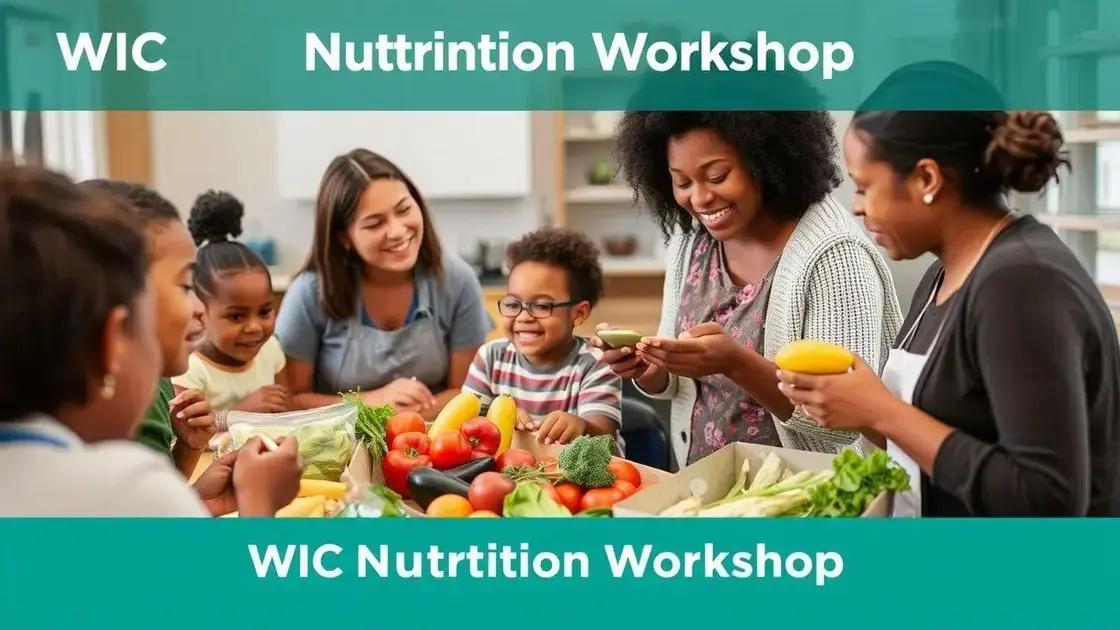
Being a WIC participant offers numerous benefits that can significantly impact the health and well-being of families. These advantages extend beyond just receiving food assistance; they play a crucial role in helping families lead healthier lives.
Nutritional Support
One of the primary benefits of WIC is the access to nutritional support. Participants receive tailored food packages that cater to their specific needs. This ensures that pregnant women, breastfeeding mothers, and young children receive essential nutrients for their growth and health.
Education and Counseling
WIC provides valuable nutrition education and counseling. This helps families learn about:
- Healthy eating habits.
- Meal planning and budgeting.
- Importance of breastfeeding.
Families can attend workshops and receive personalized advice, which empowers them to make informed food choices.
Access to Health Services
In addition to food and education, WIC connects participants to important health services. This includes referrals to health care providers, immunizations, and health screenings. Such services help families maintain their overall health and well-being.
Being involved in WIC also promotes a sense of community. Participants can connect with other families and share experiences, fostering support networks that can be invaluable.
All these benefits make being a WIC participant a vital resource for many families. By receiving nutritional assistance, education, and access to health services, families can improve their quality of life and ensure a healthier future for their children.
Application process for WIC assistance
The application process for WIC assistance is designed to be straightforward, ensuring that eligible families can easily access the help they need. This process involves several key steps that applicants must follow to ensure a successful enrollment.
Step 1: Check Eligibility
Before applying, it’s important to check if you meet the eligibility criteria. WIC primarily serves low-income women who are pregnant or recently gave birth, infants, and children under five years old. Verify your household income and residency to make sure you qualify.
Step 2: Locate Your Local WIC Office
The next step is to find your local WIC office. Each state manages its WIC program differently. You can usually find this information on your state’s health department website. A simple online search for “WIC office near me” can also help you locate the nearest office.
Step 3: Gather Required Documents
When you visit the WIC office, be prepared with the following documents:
- Proof of identity for each family member.
- Proof of income, such as pay stubs or tax returns.
- Proof of residency, like a utility bill or lease agreement.
Having all necessary paperwork ready will help speed up the application process.
Step 4: Attend Your Appointment
At your appointment, a WIC representative will evaluate your documents and conduct a brief health assessment. During this time, they will ask questions about your family’s eating habits and health history. This helps determine your nutritional needs and the benefits you will receive.
Step 5: Receive Benefits
Once approved, you will receive a WIC card or vouchers that can be used to buy specific healthy foods. You will also have access to nutrition education and health referrals. Remember to maintain regular appointments to continue receiving benefits.
The application process for WIC assistance is designed to be accessible and supportive. By taking these steps, families can successfully enroll and start benefiting from the program.
Common misconceptions about WIC services
There are several common misconceptions about WIC services that can confuse potential applicants. Understanding the truth behind these myths is important for families seeking assistance through the program.
Myth 1: WIC is only for low-income families
While it is true that WIC primarily serves low-income families, the definition of low-income varies. Many families may not realize they qualify due to their income level, and WIC is designed to support a broad range of families in need, not just those at the extreme low end.
Myth 2: You have to be a single parent to qualify
Another misconception is that only single parents can apply for WIC. This is not accurate. Both single-parent families and two-parent families, regardless of their living situation, can qualify for assistance if they meet the income and residency guidelines.
Myth 3: WIC benefits are limited to food coupons
Many people believe that WIC benefits only include food vouchers, but this is just one part of the service. Participants also receive nutrition education, health screenings, and referrals to other services, which play a crucial role in improving overall family health.
Myth 4: You cannot receive WIC if you work
Many people think that if they have a job, they cannot qualify for WIC. This is not true. Working families can still meet the eligibility requirements based on their income. WIC is designed to support working families who may not have enough resources to provide adequate nutrition for their children.
Dispelling these misconceptions is vital for ensuring that families can access the nutritional support they need. Understanding the reality of WIC services can help more families take advantage of the benefits offered through this essential program.
In conclusion, WIC is a vital resource for families who need nutritional support. It provides more than just food vouchers; it offers education, health services, and a sense of community. By understanding the eligibility criteria and debunking common misconceptions, more families can access these crucial benefits. Remember, WIC is there to help support you and your child’s health.
\n\n\n
\n
\n
FAQ – Common Questions About WIC Assistance
What is WIC and who does it serve?
WIC, or Women, Infants, and Children, is a program that provides nutritional assistance to low-income families, primarily supporting pregnant women, breastfeeding mothers, and children under five.
What are the eligibility criteria for WIC?
Eligibility for WIC includes meeting income guidelines, residency requirements, and being part of a demographic that includes pregnant women, infants, or children under five.
Can working families qualify for WIC benefits?
Yes, working families can qualify for WIC as long as they meet the income requirements set by the program.
What benefits do WIC participants receive?
WIC participants receive food vouchers, nutrition education, breastfeeding support, and referrals to health services, aiming to improve overall family health.