Legal updates on Roe v. Wade have resulted in varying state laws on abortion, influencing access and reproductive rights across the United States while public opinion trends indicate growing support for these rights.
Legal updates on Roe v. Wade are crucial for understanding current reproductive rights in the U.S. Have you kept up with the latest changes? Let’s dive into what these updates mean for everyone.
Recent court decisions and their implications
Recent court decisions have significantly impacted the landscape of reproductive rights in the United States. Many people are eager to understand how these rulings affect Roe v. Wade and what they mean for future rights.
Key Court Rulings
Several key rulings have shaped the current state of abortion access. For instance, courts have assessed challenges to abortion laws, weighing their constitutionality against precedent. Supreme Court decisions often set important precedents that lower courts will follow.
- Case 1: An overview of a significant ruling and its implications.
- Case 2: Another crucial decision affecting state laws.
- Case 3: A ruling highlighting the balance between state and federal powers.
These cases highlight the dynamics at play in courts today. As rulings emerge, they can lead to varying interpretations across different jurisdictions. This can create a patchwork of abortion laws, complicating access for many individuals.
The Impact on State Laws
Some states have reacted to recent rulings by enacting new legislation that either tightens or expands access to abortion services. Understanding the impacts on local laws is essential. Some states have even moved to challenge Roe v. Wade directly, which could result in significant changes to reproductive rights.
As different circuits handle these issues, anticipate shifts in public opinion and legislative actions. As states recalibrate their positions, citizens may see fluctuating access to healthcare services related to reproductive rights. Keep an eye on key discussions concerning these rulings, as they are bound to influence future legal battles.
In essence, the court’s interpretations profoundly affect the rules surrounding Roe v. Wade. Watching how these rulings unfold is critical for anyone interested in reproductive rights and policies in the U.S.
Key arguments in Roe v. Wade cases
The key arguments in Roe v. Wade cases have been a focal point in the ongoing debate surrounding reproductive rights. Understanding these arguments helps clarify the positions held by both advocates and opponents of abortion rights.
Pro-Choice Perspectives
Pro-choice advocates emphasize the importance of maintaining a woman’s right to choose. They argue that access to safe and legal abortion is essential for:
- Women’s autonomy: Every woman should have the power to make decisions about her own body.
- Health considerations: Access to abortion is crucial for health, especially in cases of medical emergencies.
- Socioeconomic factors: Unplanned pregnancies can lead to economic hardship; allowing choice provides greater stability.
This ongoing conversation highlights the belief that reproductive rights are human rights. These arguments showcase the fundamental values that underpin the pro-choice movement.
Pro-Life Perspectives
Conversely, proponents of the pro-life movement advocate for the rights of the unborn. They assert that:
- Life begins at conception: Every fetus has a right to life, which should be protected by law.
- Moral and ethical considerations: Many believe that terminating a pregnancy is morally wrong and equates to taking a life.
- Alternatives exist: They suggest that adoption and other options should be promoted instead of abortion.
Both sides present compelling arguments grounded in ethical, moral, and personal belief systems. As these discussions continue to evolve, they shape the legal landscape surrounding Roe v. Wade and reproductive rights.
Overall, understanding these key arguments contributes to a broader awareness of the implications of court decisions. The dialogue around abortion rights remains complex and multifaceted, influenced by a range of beliefs and values.
State-level changes in abortion laws
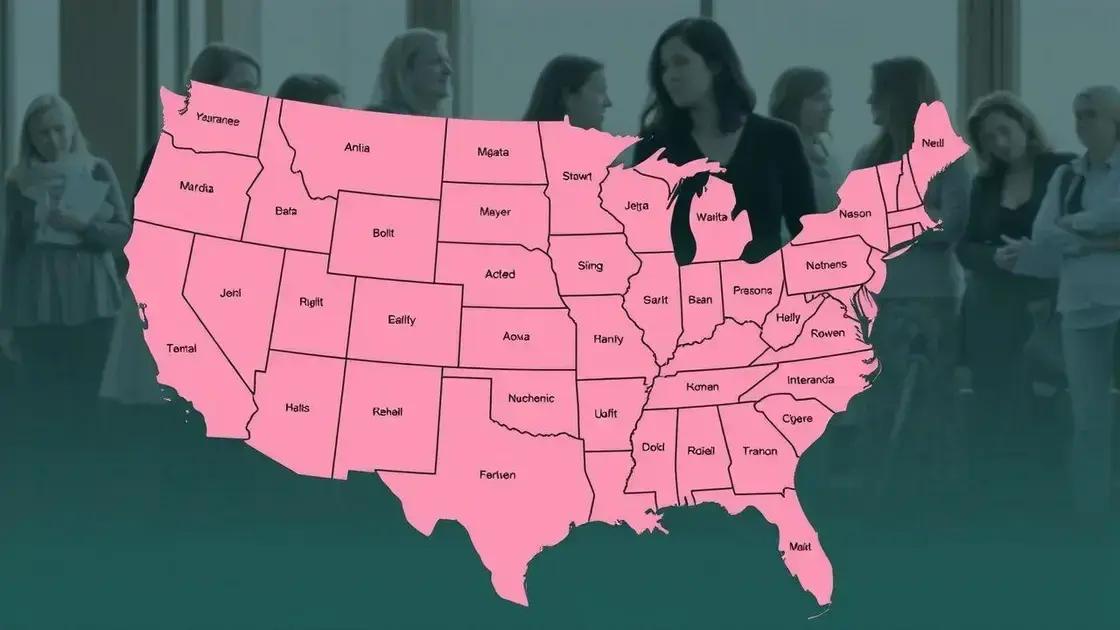
State-level changes in abortion laws have become increasingly prominent in recent years. As different states respond to the rulings surrounding Roe v. Wade, the legality and accessibility of abortion services are now more variable than ever.
Variety in State Legislation
Some states have enacted strict laws that significantly limit access to abortion, while others have chosen to uphold more liberal policies. These differences can lead to confusion and inequality in access:
- Trigger laws: Certain states have passed laws that automatically ban abortion if federal protections are removed.
- Gestational limits: Some states impose specific time frames, restricting when an abortion can legally occur.
- Mandatory waiting periods: Other states require waiting periods before an abortion can take place, impacting a woman’s ability to access services quickly.
On the flip side, there are states that have moved to protect abortion rights by enacting legislation that defends access and expands rights. This divergence can create a patchwork of laws across the country.
Impacts on Women and Healthcare Providers
The changes in state-level laws impact not only women but also healthcare providers. In states with restrictive laws, providers may face legal challenges, which could discourage them from offering services. The effects go beyond legalities; they also influence the emotional and mental health of those seeking care.
The ongoing changes add to the uncertainty about the future landscape of reproductive rights. Women in restrictive states may find themselves navigating complex legal situations to access the healthcare they need.
Overall, the differences in state laws regarding abortion reflect the broader societal debates surrounding reproductive rights. Keeping informed about these changes is essential for understanding the implications of Roe v. Wade on a national scale.
Public opinion trends on reproductive rights
Public opinion trends on reproductive rights have shifted dramatically over the past several years. Understanding these trends is crucial for grasping the evolving landscape surrounding Roe v. Wade.
Current Attitudes
- Educational background: People with higher education levels often advocate for reproductive rights.
- Age demographics: Younger generations tend to be more supportive of abortion access than older ones.
- Political affiliation: Democrats generally favor reproductive rights, while Republicans may advocate for restrictions.
These factors illustrate how complex and multifaceted public opinion can be regarding reproductive rights.
Influence of Social Movements
The rise of various social movements has also impacted public views. Groups advocating for women’s rights have mobilized efforts to increase awareness and activism surrounding reproductive health. Social media campaigns play a crucial role in shaping opinions and disseminating information quickly. Many people are influenced by personal stories they see online, which can create empathy and understanding about reproductive health matters.
Moreover, high-profile cases and legislative changes often ignite public debate and lead to a reevaluation of opinions. When discussions around Roe v. Wade enter mainstream media, they can spark conversations among families, friends, and communities.
As public opinion continues to evolve, staying informed about these trends is essential. Awareness of shifting attitudes can guide policymakers and advocates in their efforts to support or challenge reproductive rights.
Future outlook for reproductive health policies
The future outlook for reproductive health policies is uncertain yet pivotal as ongoing debates shape the existing legal framework. As conversations around Roe v. Wade continue, it is important to consider how policies may evolve in response to public sentiment and legislative actions.
Potential Legal Changes
Some experts predict that legal challenges will increase, leading to potential shifts in how reproductive rights are protected. Possible scenarios include:
- The expansion of protections: Some states may introduce legislation to further protect reproductive rights, ensuring access remains available.
- Increased restrictions: On the other hand, certain states might implement more stringent laws in response to emerging political climates.
- Judicial decisions: Decisions from higher courts could either fortify or dismantle existing protections, leading to a new legal landscape.
Each of these developments can have significant implications for access to reproductive healthcare services.
The Role of Advocacy Groups
Advocacy organizations play a critical role in shaping the future of reproductive health policies. These groups often mobilize public support and influence legislation by highlighting the importance of accessible healthcare. They work to educate the public and lawmakers about the impact of reproductive rights on women’s health. As they push for policy changes, their efforts can lead to impactful reforms.
In addition, grassroots movements are likely to continue growing as younger generations become more active in the political process. This engagement may shift the discussion toward more equitable solutions for reproductive health issues.
Ultimately, the future of reproductive health policies will depend on various factors, including legal rulings, public opinion, and advocacy efforts. Staying informed about these developments is essential for understanding how reproductive rights will evolve.
FAQ – Frequently Asked Questions about Reproductive Rights
What is Roe v. Wade?
Roe v. Wade is a landmark Supreme Court case that legalized abortion nationwide in the United States, establishing a woman’s right to choose.
What are the current trends in public opinion regarding reproductive rights?
Recent surveys indicate that many Americans support access to abortion services, with opinions varying based on factors like age, education, and political affiliation.
How do state-level laws impact access to abortion?
State-level laws can vary significantly, with some states imposing strict restrictions while others protect access, creating disparities in reproductive healthcare.
What role do advocacy groups play in shaping reproductive health policies?
Advocacy groups work to mobilize public support, influence legislation, and raise awareness about reproductive rights, playing a crucial role in the ongoing debate.