U.S. gas price trends today reflect the influence of global oil markets, seasonal demand, regional variations, and factors like vehicle maintenance and driving habits, making it essential for consumers to stay informed to manage fuel expenses effectively.
U.S. gas price trends today are more than just numbers on a billboard; they reflect the state of the economy and influence our daily lives. Ever wondered how these prices impact your budget? Let’s dive in.
Current state of U.S. gas prices
The current state of U.S. gas prices is a topic that captures everyone’s attention, especially when it comes to filling up our vehicles. As of now, prices are fluctuating due to several economic factors. Understanding these changes is key to managing your fuel costs effectively.
Recent Trends in Gas Prices
Currently, gas prices have shown significant variability across the United States. Various elements, such as seasonal demand and crude oil prices, play a critical role in determining the cost at the pump.
Factors Influencing Price Changes
Several primary factors contribute to the state of gas prices today:
- Global oil supply disruptions
- Local demand surges during holidays
- Political events affecting oil-producing countries
Additionally, refinery maintenance and unexpected outages can lead to sharp increases in gas prices. It’s wise for consumers to stay informed about these factors.
The local market also has an impact. Prices can vary significantly between states and even within cities. For example, areas with less competition among gas stations may see higher prices, while regions with more options usually benefit from lower rates. This dynamic can confuse many consumers trying to budget for fuel expenses.
Understanding Regional Variations
Consumers should note that regions like the West Coast often have higher prices due to state taxes and environmental regulations. In contrast, the Gulf Coast may enjoy lower rates thanks to closer refinery access.
Overall, comprehending the current state of U.S. gas prices is essential for consumers looking to save money at the pump. By staying aware of these trends and factors, individuals can make more informed decisions about their fuel consumption and expenses.
Factors influencing gas price fluctuations
Understanding the factors influencing gas price fluctuations is crucial for anyone who drives. These fluctuations can significantly affect how much we pay at the pump. Many elements contribute to these changes, and being aware of them helps consumers make better decisions.
Supply and Demand Dynamics
The basic principle of supply and demand plays a significant role in gas prices. When demand rises, especially during the summer months, prices tend to increase. Conversely, when demand drops, prices may fall.
- Seasonal travel increases demand
- Bad weather can disrupt supply
- Economic activities that require more fuel
Additionally, if there is a surplus of crude oil, prices often drop as competition increases among suppliers. Therefore, paying attention to market trends can help predict price changes.
Global Political Events
Another key factor is geopolitical issues. Events like wars or sanctions can lead to instability in oil-producing countries. This often results in decreased supply, causing prices to rise. Therefore, events on the other side of the world can directly impact gas prices in the U.S.
For instance, when conflicts emerge in the Middle East, we often see an immediate response in gas pricing here at home. Consumers need to stay informed about global news to anticipate these changes.
Refinery Operations
Refineries are responsible for turning crude oil into gasoline, and their operations affect local prices. Maintenance and upgrades can lead to temporary shortages, raising prices in specific areas.
- Refineries can schedule maintenance during low demand
- Unexpected outages lead to price spikes
- New environmental regulations can increase costs
By understanding these influencing factors, consumers can be better prepared for price changes. Staying informed means making smarter decisions about fuel consumption and budgeting for rising costs.
Regional variations in U.S. gas prices
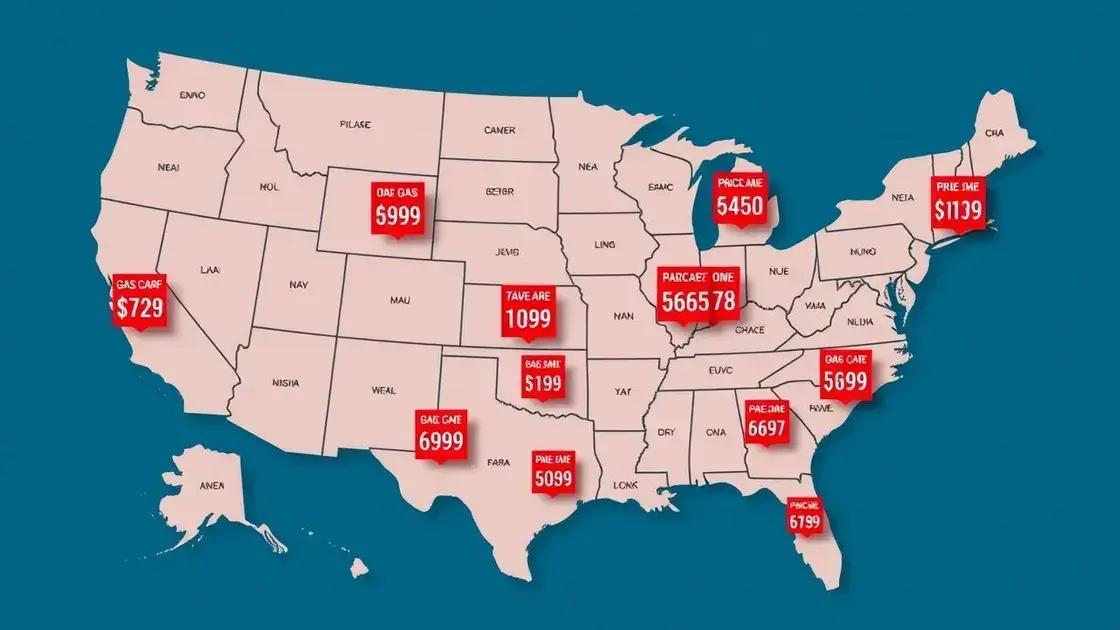
The regional variations in U.S. gas prices highlight how location greatly affects the cost consumers pay at the pump. Prices can differ vastly from one state to another, and even within the same state. Understanding these variations can help drivers budget more effectively.
Impact of State Taxes
One major reason for price differences is state taxes on gasoline. Some states impose high taxes to fund infrastructure and transportation, while others have much lower rates. This tax burden translates to what consumers ultimately pay. For example, California has some of the highest gas taxes in the nation, making fuel costs significantly more expensive.
Influence of Supply Sources
Another factor is the proximity to refineries. Regions that are closer to oil refineries generally have lower gas prices because transportation costs are reduced. Conversely, areas far from refining facilities often see higher prices due to increased shipping costs.
- West Coast states usually have higher prices
- Gulf Coast states benefit from lower costs
- Midwest has frequent price fluctuations due to local supply
Additionally, local market competition can impact pricing. In cities with many gas stations, prices may be lower, whereas in rural areas with few options, prices can rise.
Seasonal Variations
Seasonal changes also play a role. During summer months, demand typically spikes, especially with road trips and vacations. This increased demand can lead to higher prices, which vary from one region to another based on how much local stations can raise their rates. Understanding these patterns can help consumers fill up at optimal times.
Furthermore, monitoring price trends can indicate whether prices in a particular region are likely to rise or fall. With this knowledge, consumers can make smarter choices about when and where to refuel.
Tips for saving on gas expenses
Finding ways to save on gas expenses can make a significant difference in your monthly budget. With fuel prices fluctuating, having some tips for saving on gas expenses is crucial for every driver. These simple strategies can help you spend less at the pump while still meeting your travel needs.
Maintain Your Vehicle
A well-maintained vehicle operates more efficiently and uses less gas. Regular oil changes, proper tire inflation, and routine inspections ensure everything runs smoothly. This leads to better gas mileage, saving you money.
- Check your tire pressure monthly
- Change your oil regularly as recommended
- Replace air filters when needed
Additionally, using the manufacturer-recommended fuel type helps optimize performance. This simple care can drastically reduce how much gas you consume.
Drive Smart
Adopting a few smart driving habits can also lead to savings. Avoid aggressive driving, as sudden acceleration and hard braking can waste fuel. Instead, maintain a steady speed and use cruise control whenever possible.
- Avoid idling for long periods
- Limit highway speeds to enhance efficiency
- Combine trips to reduce total mileage
By driving more smoothly and efficiently, you can extend the life of your gas while enjoying a more comfortable ride.
Choose the Right Time to Fill Up
Interestingly, gas prices can vary throughout the day. Often, fuel prices are lower early in the morning or later in the evening. Planning your refuel times can add to your savings. Additionally, keep an eye on local price trends to know when to fill up.
Using apps that track gas prices can help you find the least expensive options near you. With a little research, you can determine the best time and place to buy gas.
Consider Alternative Transportation
When possible, consider alternative modes of transportation. Carpooling, public transit, biking, or walking can drastically cut down on gas expenses. Not only does this save money, but it also reduces stress and wear on your vehicle.
With the right strategies and habits, it’s possible to manage fuel expenses effectively. By implementing these tips for saving on gas expenses, drivers can save money and make the most of their gas budget.
Future predictions for gas prices in the U.S.
The future predictions for gas prices in the U.S. are always a topic of interest for consumers. As global events and market dynamics evolve, understanding what to expect can help drivers plan better for their fuel expenses. Analysts use various data points to forecast price trends.
Market Trends and Analysis
Currently, experts are analyzing market conditions that could impact gas prices in the near future. With fluctuations in crude oil prices heavily influencing gas costs, it is important to keep an eye on these trends.
- Increasing global demand for oil
- OPEC production decisions
- Geopolitical tensions affecting oil supply
As countries continue to recover from economic downturns and seek to increase production, prices may stabilize or rise based on demand supply equations. Changes in oil production rates can dramatically influence gas prices at the pump.
Seasonal Patterns
Historically, gas prices tend to rise during the summer months due to increased travel. Many families take road trips, leading to higher demand. However, as the summer ends, prices often see a decline. Understanding this seasonal pattern can help consumers time their purchases for better rates.
Impact of Renewable Energy
The push towards renewable energy and electric vehicles is also reshaping the future of gas prices. As more consumers adopt electric vehicles, gas demand may decline over time. This could lead to lower prices, but the transition will take time.
Additionally, government regulations and incentives aimed at promoting green energy solutions could affect traditional fuel markets. Consumers might start seeing the effects of these changes in the coming years.
Technological Advancements
Advancements in technology, such as fracking and improved extraction methods, are making oil production more efficient. This could lead to a larger supply, which might help stabilize or lower prices in the long term. Investors and consumers alike are watching how these technologies evolve.
Ultimately, while predictions can be uncertain, understanding the factors that influence future gas prices in the U.S. helps drivers anticipate changes. Keeping informed about global issues, local market trends, and seasonal behaviors will empower consumers to navigate gas pricing effectively.
In conclusion, understanding the dynamics of gas prices is essential for every driver. Factors such as market trends, seasonal variations, and regional influences all play a part in how much we pay at the pump. By adopting smart habits and staying informed about future predictions, consumers can better manage their fuel expenses. Saving on gas is possible through vehicle maintenance and smart driving choices. As the market evolves with new technology and shifts toward renewable energy, staying educated will help everyone navigate the changing landscape of fuel costs.
FAQ – Frequently Asked Questions About U.S. Gas Prices
What factors influence gas prices in the U.S.?
Gas prices in the U.S. are influenced by global oil supply and demand, seasonal travel patterns, and state taxes.
How can I save money on gas?
You can save money on gas by maintaining your vehicle, driving efficiently, and filling up at strategic times.
Why do gas prices differ by region?
Gas prices vary by region due to differences in state taxes, proximity to refineries, and local market competition.
What are future predictions for gas prices?
Future predictions for gas prices are uncertain but may be affected by trends in renewable energy, technology advancements, and global events.