A government shutdown alert in 2025 may disrupt federal services and impact employees, requiring citizens to prepare by understanding potential challenges and creating emergency plans.
Government shutdown alert 2025 is making headlines, and it’s crucial to understand what this means for you. Are you ready for potential changes to services and payments? Let’s dive into the details.
Overview of the potential government shutdown
Understanding the potential government shutdown is vital for everyone. As we delve into this topic, we will explore its causes and potential outcomes.
Possible Causes of a Government Shutdown
A government shutdown can occur due to several reasons. Here are some common causes:
- Disagreements over budget proposals
- Political standoffs between parties
- Failure to reach a funding agreement
These situations create uncertainty and fear about what might happen next. Knowing the factors at play can help prepare us for potential impacts.
What Happens During a Shutdown?
During a shutdown, many federal services are affected. This can mean delays in government functions and services. For example:
- National parks may close
- Federal employees could face unpaid leave
- Public services might be limited or halted
Moreover, the economy can experience a ripple effect. Citizens may feel the fallout in various areas, including travel and public health.
It’s essential to be aware that not all government operations cease. Certain critical services, like law enforcement and public safety, will continue. However, understanding what gets impacted can aid in planning.
Community Effects
The ripple effects of a government shutdown extend beyond federal employees. Local communities might feel economic shifts as well. Many depend on federal funding for programs.
In addition, small businesses may face disruptions. For example, if contracts and payments are delayed, it can lead to cash flow issues. Thus, proactively seeking information can be beneficial for everyone.
Key dates and timeline for 2025
Knowing the key dates and timeline for 2025 is crucial as we prepare for the potential government shutdown. Understanding when major events will occur can help everyone plan accordingly.
Important Dates to Remember
Several significant dates will shape the events of 2025:
- January 15: Deadline for the government to agree on the budget.
- April 1: Marker for the start of the fiscal year.
- October 1: Federal funding is scheduled to run out.
These dates are essential. They not only signal when discussions may intensify but also when potential impacts could occur.
Understanding the Timeline
The timeline provides insight into how events might unfold. For instance, if Congress can’t agree on a budget before the deadline, a shutdown may be unavoidable. It’s important to track negotiations in the months leading up to these dates.
During this period, citizens should stay informed and watch for updates. News outlets will cover these stories closely, and staying updated can reduce uncertainty.
Governments may announce early warnings as the dates approach. Preparation includes knowing what services will be impacted and how to access critical information. If necessary, having contingency plans in place can be beneficial.
Impact on federal services and employees
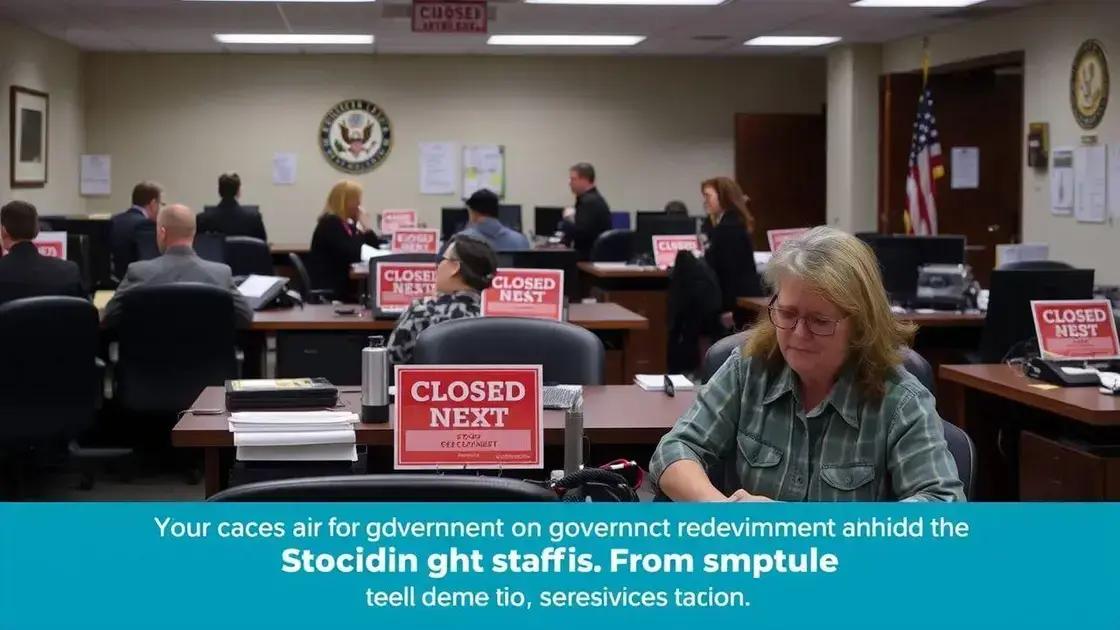
The impact on federal services and employees during a government shutdown is significant. Many essential functions may be disrupted, which can lead to uncertainty for everyone involved.
Federal Services Affected
During a shutdown, various federal services experience interruptions. Some key areas impacted include:
- National parks and recreational areas may close, limiting access to public lands.
- Processing of applications for federal assistance can be delayed.
- Some federal websites may not be maintained, affecting access to crucial information.
These disruptions highlight how a shutdown can have far-reaching effects on everyday life. Citizens might struggle with bureaucracy and delayed services, leading to frustration.
Effects on Federal Employees
Federal employees face unique challenges during a shutdown. Many who are considered non-essential may be placed on unpaid leave. This can create financial stress for families relying on their income.
Additionally, essential workers often have to continue their duties without pay until the shutdown ends. Understanding this situation is vital. The live strain can affect morale and productivity.
The uncertainty surrounding job security can also lead to diminished motivation among federal employees. Anxiety about prolonged shutdowns might impact mental health and well-being.
State responses to a potential shutdown
The way states respond to a potential government shutdown varies widely. Each state has unique circumstances and resources, which influences its reaction and preparedness.
State-Level Preparations
Some states take proactive measures to mitigate the impact of a shutdown. These may include:
- Setting aside emergency funds to support affected services.
- Developing contingency plans for essential state programs.
- Coordinating with local governments to communicate effectively with residents.
These actions are crucial as they help maintain stability during uncertain times. Being prepared can lessen the negative effects on residents.
Communication with Citizens
Effective communication is key during a shutdown. States often inform citizens about potential impacts and available resources. This can include:
- Public announcements and updates through various media channels.
- Providing guidance on accessing essential services.
- Distributing information about any available state aid programs.
Clear communication helps residents plan accordingly. Understanding their rights and resources can make a significant difference in adapting to challenges.
States may also collaborate with local organizations to provide assistance. This community engagement fosters support and reassurance for those affected.
How citizens can prepare for disruptions
When facing a government shutdown, it’s important for citizens to know how to prepare for potential disruptions. Being proactive can help mitigate the impact and reduce uncertainty.
Understanding Potential Disruptions
One of the first steps is to evaluate what services might be affected. Common disruptions during a shutdown include:
- Delays in federal payments and benefits.
- Access issues to government services, like parks and financial aid.
- Increased traffic at local agencies as citizens seek information.
Recognizing these potential challenges is crucial for planning ahead and minimizing their effects on daily life.
Creating a Personal Plan
A well-thought-out plan can make a significant difference. Citizenship should consider the following:
- Establishing an emergency budget that accounts for potential income delays.
- Stocking up on essential supplies for longer waiting periods.
- Staying informed about local news and updates related to the shutdown.
Being organized helps individuals feel more secure during uncertain times. Also, having clear communication with family members can ease anxiety about what may happen.
Additionally, it’s wise to reach out to local community resources that may be available, such as food banks or assistance programs. Knowing where to find help is invaluable when services are disrupted.
In summary, being prepared for a potential government shutdown is essential for everyone. Understanding the implications, staying informed, and creating a personal plan can help mitigate disruptions. It’s important to remember that while challenges may arise, proactive steps can provide security and peace of mind during uncertain times.
FAQ – Frequently Asked Questions about Government Shutdown Preparedness
What should I do to prepare for a government shutdown?
Create an emergency plan, stay informed about updates, and gather essential resources.
How will a government shutdown affect federal services?
Many federal services may be delayed or suspended, impacting programs like visa processing and public assistance.
Are there local resources available during a shutdown?
Yes, local organizations, food banks, and community services often provide assistance during shutdowns.
How can I stay updated on the situation?
Follow local news sources and check government websites for the latest information on shutdown developments.