Key takeaways from the presidential debate highlight candidates’ strategies, key moments, and voter reactions, significantly influencing public opinion and shaping the dynamics of the upcoming elections.
Key takeaways from presidential debate often reveal more than just candidates’ positions. They showcase the evolving political landscape and what it means for voters. Have you considered how these debates shape public opinion and influence future policies?
major candidates and their platforms
The major candidates in the presidential debate each bring unique platforms to the table. Understanding their key proposals helps voters make informed choices. Each candidate’s vision reflects their responses to the concerns of the electorate.
Candidate A: Vision and Policies
Candidate A emphasizes economic growth and job creation. Their focus on innovation aims to boost local industries and provide new job opportunities. They also advocate for environmental sustainability, proposing policies to combat climate change while promoting green jobs.
- Support for small businesses.
- Investment in renewable energy.
- Implementation of a fair tax policy.
- Healthcare reforms aimed at accessibility.
This approach resonates with many who are eager for change. However, Candidate A’s policies also invite criticism from those who fear rapid changes might overlook some community needs.
Candidate B: Promises and Challenges
Candidate B, on the other hand, rallies for social equality and justice. Their platform includes robust healthcare reforms and expanding education access. Focusing on community development, they believe everyone deserves an opportunity to thrive.
Candidate B’s supporters appreciate their dedication to inclusive policies. This includes an emphasis on funding schools in underprivileged areas and increasing access to mental health services.
- Universal healthcare system.
- Tuition-free public college.
- Community policing initiatives.
- Support for marginalized communities.
However, as the campaign progresses, questions about the feasibility of these initiatives arise among critics.
Voters should also consider Candidate C, who offers a different take on foreign policy and national defense. They argue for a strong international presence while prioritizing diplomacy over military actions. Each candidate presents distinct platforms, making the upcoming election pivotal in shaping the country’s future.
key moments that shaped the debate
Throughout the recent debate, several key moments stood out, capturing the audience’s attention and influencing public opinion. These moments often reflect the candidates’ character and readiness to lead.
Surprising Exchanges
One notable exchange occurred when Candidate A challenged Candidate B on their stance regarding healthcare. This moment was unexpected and highlighted the intensity of their rivalry. The audience responded with enthusiasm, signaling that they appreciated the direct confrontation.
- Candidate A referred to specific statistics about healthcare costs.
- Candidate B defended their position with personal stories.
- The exchange prompted significant social media buzz.
This instance exemplified how candidates can engage with each other and energize their supporters. Another key moment came when the candidates discussed climate change.
Passionate Appeals
Candidate C made a passionate appeal for immediate action against climate change. Their emphasis on the urgency of the issue resonated with young voters, who are increasingly concerned about the environment. The personal anecdotes used by Candidate C made the argument relatable.
Furthermore, when Candidate B responded with their plan, it sparked a heated debate. The contrasting views on climate solutions showcased the candidates’ differing ideologies, prompting voters to consider which approach aligned best with their values.
- Candidate C’s call for renewable energy investments.
- Candidate B’s focus on regulatory measures.
- Audience reactions varied based on demographic factors.
Such moments reflect the candidates’ passion for their policies, showcasing not only their plans but their ability to connect with voters. Another pivotal instance occurred during the discussion about foreign policy.
Debate Over Strategy
The candidates presented starkly different strategies toward international relations. Candidate A emphasized a strong military presence, while Candidate B advocated for diplomacy. This debate was marked by heated exchanges that revealed their perspectives on national security and cooperation.
These key moments serve as critical touchpoints for voters, shaping their perceptions of each candidate’s suitability for leadership. Understanding these instances helps voters appreciate the nuances of each debate and form their opinions based on genuine engagement.
voter reactions and expectations
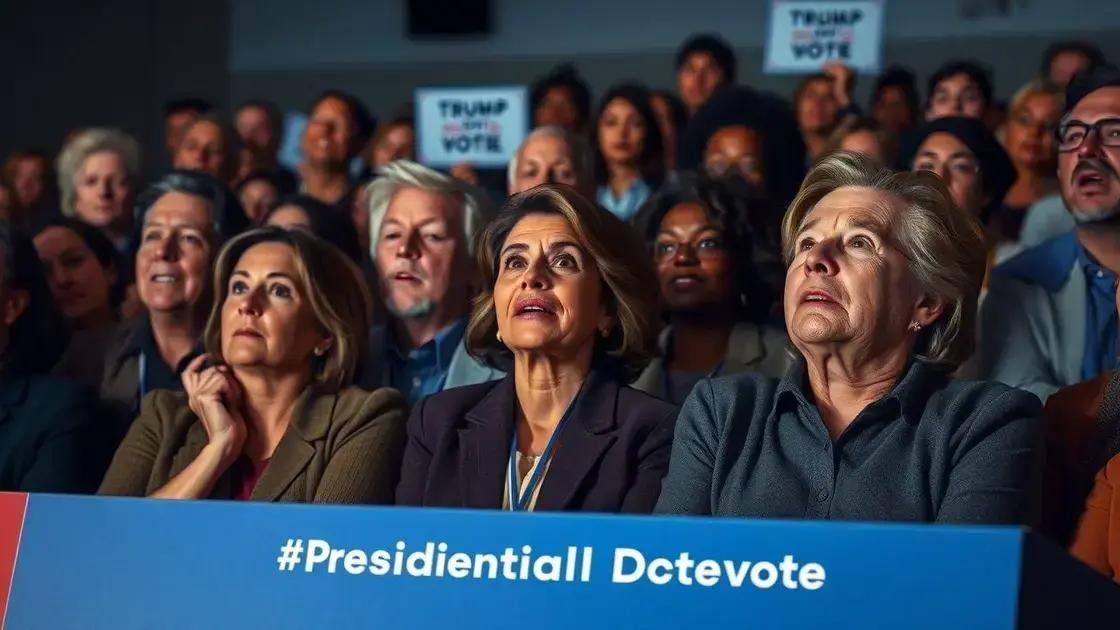
Voter reactions during and after the debate reveal much about public sentiment. Observing how voters feel can shape future discussions and campaigns. Many expect candidates to address their concerns directly and honestly.
Immediate Reactions
As the debate unfolded, social media platforms lit up with comments and reactions. Viewers shared their thoughts on which candidate performed best, reflecting a spectrum of opinions. Many expressed surprise at unexpected moments, while others praised candidates for their clarity.
- Positive reactions to Candidate A’s strong stance on economic issues.
- Concerns about Candidate B’s responses on healthcare.
- Candidate C was favored for their approach to climate change.
This immediate feedback highlights the importance of engaging with the audience’s sentiments. Polls conducted shortly after the debate show that the public is paying close attention to these performances.
Long-term Expectations
Beyond immediate reactions, long-term expectations emerged as a significant theme. Voters hope that candidates will remain consistent with their promises. They want to see real plans and solutions that will be actionable once elected.
Moreover, trust is a crucial element for voters. They expect transparency and accountability from their candidates. As discussions around key issues continue, candidates must remember that keeping voter confidence is essential.
- Expectations for follow-up actions from the candidates.
- A desire for clarity on complex issues.
- Voter skepticism about vague promises.
Ultimately, understanding these reactions and expectations helps both candidates and voters. It encourages open dialogue and ensures that elections focus on real issues that matter to citizens. By acknowledging voter sentiments, candidates can tailor their messages to resonate more effectively.
impact on upcoming elections
The debate has significant implications for the upcoming elections. Candidates’ performances can shift public opinion and influence voter turnout. Understanding these impacts is essential for both candidates and voters.
The Shift in Voter Sentiment
Following the debate, many voters reevaluate their choices. Candidates who performed well often see a surge in support, while others may face backlash. This shift can be seen in post-debate polls that gauge voter sentiment.
- Candidate A gained traction among undecided voters.
- Candidate B’s performance led to a decline in their earlier support.
- Candidate C successfully appealed to younger voters.
Such changes are crucial as they can reshape campaign strategies. Candidates often adjust their focus based on how the debate resonated with voters.
Influence on Campaign Strategies
From debates, candidates draw lessons on what issues resonate most with the electorate. They may also identify which arguments need more emphasis. For example, after a strong performance on healthcare, a candidate may ramp up their messaging around that theme.
Debates help candidates highlight their differences and clarify their positions. This clarity can attract voters who are looking for concrete solutions rather than vague promises.
- Increased focus on local issues based on voter response.
- Emphasis on effective communication and relatable policies.
- Adjustments in campaign tactics tailored to audience feedback.
The impact of a debate goes beyond the immediate reaction; it’s a long-term factor in shaping the electoral landscape. Voters often discuss the debates with friends and family, spreading opinions that can greatly influence undecided voters.
As the election approaches, the resonance of the debates will continue to play a critical role in shaping voter behavior. Candidates must remain aware of their public image while navigating the complexities of their campaign strategies.
analysis of debate strategies
Analyzing the debate strategies used by candidates offers insight into their effectiveness and overall campaign goals. Each candidate adopts specific strategies to influence voters and showcase their strengths.
Key Approaches
During the debate, candidates employed various approaches to connect with their audience. Some chose to focus on strong, emotional appeals, while others relied on facts and data to support their arguments. Recognizing these strategies can shed light on their potential impact.
- Candidate A focused on personal stories to create an emotional connection.
- Candidate B presented detailed statistics to reinforce their position.
- Candidate C used humor to disarm opponents and engage the audience.
These differing approaches highlight candidates’ styles and their attempts to resonate with different voter demographics. Voters often react positively to candidates who can communicate their ideas clearly and authentically.
Direct Engagement
Another effective strategy involved direct engagement with opponents. Candidates who confronted each other during the debate created memorable moments that drew viewers’ attention. Such interactions can leave a lasting impression on the audience and may sway undecided voters.
Strategies of direct engagement often include:
- Challenging opponents on specific issues.
- Addressing rival claims confidently and assertively.
- Using rebuttals that resonate with audience concerns.
The effectiveness of these strategies often depends on the delivery and context in which they are used. Candidates must balance assertiveness with the need for respectful dialogue.
Additionally, maintaining a calm demeanor under pressure is vital. Candidates who can convey their points confidently while deflecting attacks tend to impress voters.
Overall, the analysis of debate strategies offers valuable insights into how candidates position themselves for the upcoming elections.
In summary, the recent presidential debate has offered many insights into candidates’ strategies and public expectations. Key moments during the debate sparked significant reactions from the audience, shaping voter opinions and expectations for the upcoming elections. Analyzing these strategies shows how candidates engage with their opponents and attempt to connect with voters. As we move closer to the elections, understanding these dynamics will be crucial for informed decision-making. Voters are encouraged to consider the implications of candidates’ messages and their readiness to lead.
FAQ – Key Takeaways from the Presidential Debate
What were the main strategies used by candidates during the debate?
Candidates used various strategies, including emotional appeals, factual data presentations, and direct engagement with each other.
How did the debate impact voter opinions?
The debate shifted public support, with some candidates gaining traction while others faced a decline in their support.
What kind of moments resonated most with the audience?
Key moments included surprising exchanges and passionate appeals that highlighted candidates’ positions on important issues.
What should voters look for in candidates after the debate?
Voters should seek transparency, consistency in promises, and candidates’ readiness to address their concerns directly.