U.S. rental aid programs provide essential financial support to tenants facing housing insecurity, promoting stable housing, community cohesion, and economic benefits while helping families focus on education and employment.
U.S. rental aid programs are vital for many individuals facing financial difficulties. Have you ever wondered how these programs actually work and who qualifies for them? In this article, we’ll delve into the key details surrounding rental assistance and its importance.
Understanding rental aid programs in the U.S.
Understanding rental aid programs in the U.S. is crucial for many individuals facing housing difficulties. These programs aim to provide financial assistance to tenants struggling to pay their rent due to various circumstances.
What are rental aid programs?
Rental aid programs are designed to assist eligible low-income households. They ensure that families can stay in their homes during tough financial times. Programs can vary significantly from one region to another, so it’s important to be aware of local options.
Types of rental assistance
There are several types of rental assistance available:
- Emergency rental assistance: Provides immediate help to tenants facing eviction.
- Public housing programs: Offers affordable housing options for low-income families.
- Section 8 vouchers: Helps tenants pay their rent in privately-owned housing.
Each of these programs has specific eligibility requirements and funding sources, which can affect how they operate and who can access them. It’s advisable to research the options available in your specific area.
Additionally, rental aid programs often work in collaboration with local nonprofits and government agencies to provide comprehensive support. These partnerships can offer resources like legal assistance and housing counseling, ensuring families receive the help they need.
How to apply for rental assistance
Applying for rental assistance is usually straightforward. Tenants must gather necessary documents such as proof of income and identification. The application process can typically be completed online or in-person, depending on the program.
Be prepared for a waiting period, as funding is sometimes limited. However, many programs aim to process applications quickly to help families in urgent need. Remember that reaching out to local housing authorities can provide valuable guidance throughout the application process.
Overall, understanding rental aid programs and how they function can greatly benefit those in financial distress. With the right information and support, tenants can find the assistance they need to maintain stable housing.
Eligibility criteria for rental assistance
The eligibility criteria for rental assistance can vary significantly depending on the program and location. It’s important for applicants to understand these criteria to determine if they qualify for support.
Common eligibility requirements
Most rental assistance programs check specific factors to assess eligibility:
- Income limits: Many programs set maximum income levels, often based on the area median income (AMI).
- Household size: The number of people in a household can affect eligibility, as some programs consider the total income relative to household size.
- Residency: Applicants usually must reside in the jurisdiction offering assistance.
- Financial hardship: Proof of financial distress, such as job loss or reduced hours, is often required.
Understanding these criteria is crucial to navigate the application process smoothly. For example, an applicant’s total household income must typically fall below a certain threshold. If the household earns more than the specified limit, they may not qualify for assistance.
Additionally, some programs offer priority to certain vulnerable populations. This may include individuals who are elderly, disabled, or have children. Local organizations often provide guidance on the specific eligibility requirements for their programs.
Documentation needed
Applicants should prepare to provide necessary documentation, such as:
- Proof of income: This can include pay stubs, tax returns, or benefit statements.
- Identification: A government-issued ID is often required.
- Proof of residency: Documents like a lease or utility bill may be needed.
Gathering these documents early can accelerate the application process. Understanding the eligibility criteria for rental assistance is essential for anyone seeking help to ensure they meet the requirements.
Types of rental aid programs
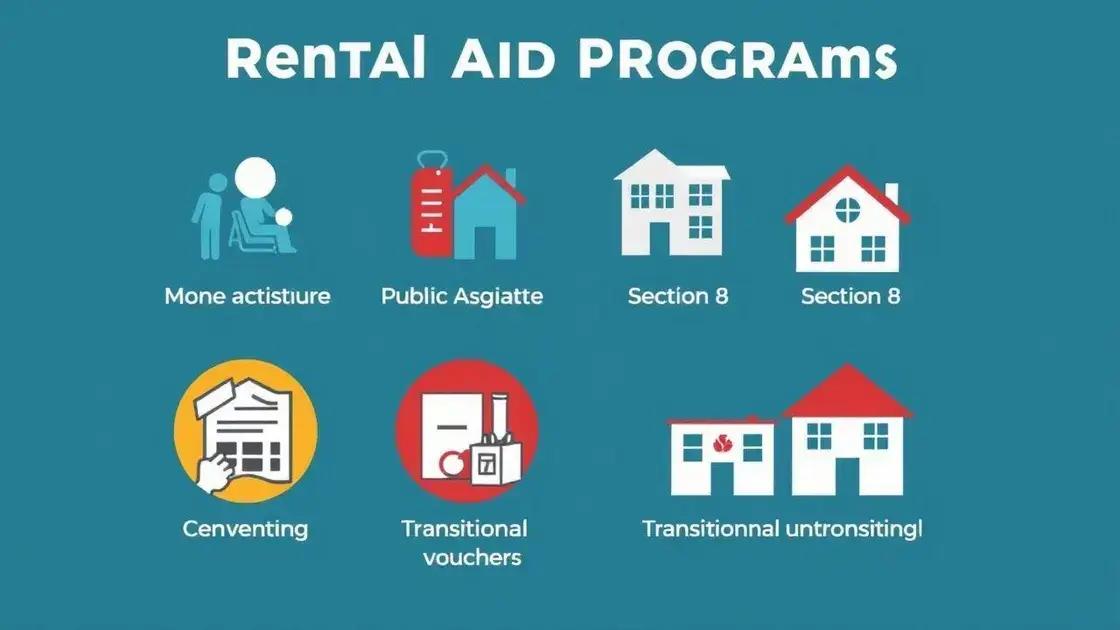
There are various types of rental aid programs available to assist those in need. These programs can significantly help tenants keep their homes during challenging financial times.
Emergency rental assistance
Emergency rental assistance programs offer immediate financial help to households facing eviction. This type of aid is crucial for families who may suddenly find themselves unable to pay their rent due to unforeseen circumstances, such as job loss or medical emergencies.
Public housing programs
Public housing programs provide affordable housing options for low-income families. These programs are often managed by local housing authorities and aim to offer safe and decent living environments. Residents typically pay a portion of their income for rent, making it a more manageable expense.
Section 8 vouchers
The Section 8 program provides rental assistance by offering vouchers to eligible families. These vouchers allow tenants to find housing in the private market, where the government pays a portion of the rent directly to the landlord. This approach gives families more choice in where they want to live.
Transitional housing programs
Transitional housing programs help individuals and families moving from homelessness to stable living situations. These programs often provide both housing and supportive services, such as job training and counseling, to help participants regain stability.
Understanding the different types of rental aid programs available can empower tenants to seek appropriate assistance. Each program caters to specific needs and circumstances, making it important for applicants to identify which option aligns best with their situation.
How to apply for rental assistance
Applying for rental assistance can seem daunting, but knowing the steps can simplify the process. Understanding how to apply can help you quickly access the support you need.
Gather necessary documents
Start by collecting the required documentation. Commonly needed documents include:
- Proof of income: This may consist of pay stubs, bank statements, or tax returns.
- Identification: A government-issued ID, such as a driver’s license or passport.
- Rental agreement: A copy of your lease or rental agreement is usually necessary.
- Proof of hardship: Documents showing your current financial situation may also be required.
Having these documents ready can make your application smoother. It’s essential to check the specific requirements of the program you are applying for, as these can vary.
Research available programs
Before applying, research the various rental assistance programs in your area. Programs can differ in terms of eligibility criteria, funding sources, and the application process. Local nonprofit organizations and housing authorities can provide valuable insights and assistance.
Complete the application
Once you’ve gathered your documents and identified the right program, complete the application. Many programs offer online applications, which can be convenient. Be sure to fill out all required fields accurately to avoid delays.
It’s also a good idea to keep a copy of your completed application and any supporting documents for your records. If you apply in person, ask for a receipt of your submission.
Follow up on your application
After submitting your application, it’s important to follow up. Check back with the agency or organization to confirm they received your application and inquire about the timeline for approvals. Staying proactive can help you understand when to expect assistance.
Applying for rental assistance may feel overwhelming at first, but breaking it down into manageable steps can help you navigate the process successfully and secure the help you need.
Impact of rental aid on communities
The impact of rental aid on communities is significant and can help stabilize neighborhood dynamics. When families receive assistance, they are less likely to face eviction, which helps maintain the integrity of the community.
Stabilizing families
Rental assistance allows families to focus on other essential needs. When housing is secure, residents can invest more in education and health. Stable housing helps children perform better in school, leading to long-term benefits for the community.
Economic benefits
When individuals retain their homes through rental aid, there are positive economic effects. Rental assistance helps local businesses as families continue to spend money on essential services.
- Increased spending: Families with stable housing can buy food, clothing, and other necessities, supporting local shops.
- Job retention: Stable housing often leads to job stability, as individuals do not face the stress of frequent relocation.
- Community investment: When residents feel secure in their housing, they are more likely to invest in their community.
Additionally, rental aid can lessen the burden on social services. Lower eviction rates mean fewer families require emergency housing or other state-funded services, allowing resources to be allocated elsewhere.
Enhancing community cohesion
Communities become stronger when families can stay in their homes. Rental assistance fosters community ties and relationships, as residents are not constantly moving. This stability encourages neighborly support and collaboration on community projects and local events.
Overall, the impact of rental aid on communities is profound. It promotes stability, encourages economic growth, and enhances the quality of life for many families. Understanding this impact is crucial for advocating for continued support for rental assistance programs.
FAQ – Frequently Asked Questions about U.S. Rental Aid Programs
What types of rental aid programs are available?
There are several types, including emergency rental assistance, public housing programs, Section 8 vouchers, and transitional housing.
How can rental assistance impact a community?
Rental assistance helps stabilize families, promotes economic growth, and fosters stronger community ties.
What documents do I need to apply for rental assistance?
You typically need proof of income, identification, rental agreements, and documentation of financial hardship.
How can I apply for rental assistance?
You can apply by gathering necessary documents, researching local programs, completing the application online or in person, and following up on your application.